
Dear Readers,
Welcome to the first newsletter of 2018! Given that all our readers are guinea pig lovers, we bet you’re pleased to see the back of the snow and the start of the lush spring grass! It’s definitely good news for all the piggies out there, who are looking forward to more time outside and all the guinea pig frolicking that spring can bring. There are things to remember, though, as we come into the warmer months. So we’ll start off with an article from Jo Lockett on spring grass, which can lead to problems if they eat too much too soon. We’ll then move to look at the short-term fostering carried out by our volunteers, and we will be throwing some fun facts at you in Val’s ‘Did you know?’ article. So, for all this and more (including info on upcoming events), read on and enjoy.
Spring grass, by Jo Lockett
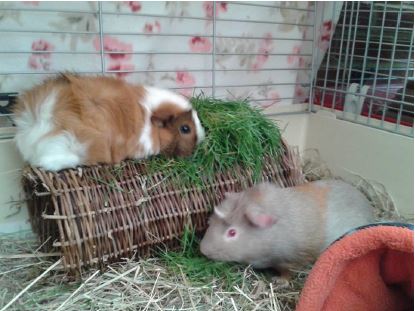 Now the weather has improved and the lawn will soon be growing, please be aware that nutrient-rich spring grass can cause problems initially if your piggies aren’t used to it.
Many people won’t put them out during autumn and winter. At April Lodge, we let ours choose and we give them the option to graze most of the year round – unless it’s freezing, snowing, frosty or pouring with rain, which it has been for the last few months! Nine times out of ten, they can be seen skipping for joy, but if they don’t come out of their carriers, then we know they aren’t interested and we bring them back into the warm.
But when the weather warms up and you start thinking about putting your little treasures outside for some grazing time, bear in mind that they won’t be used to it if you’ve kept them inside for several months.
Spring grass is very rich once it starts growing prolifically. You could start early by bringing in some snipped grass for a few weeks before you plan to put them out. Just a small handful a day will get them used to it again. Then restrict them to some scrubby/sparse grass to start off with and just for half an hour, gradually increasing time and lushness as they become re-accustomed.
Short-term fostering, by Jo Lockett
 Short-term fostering is only ever done by regular, local volunteers with lots of experience. As long as we refuse to fall in love with any(!) and hand them back when asked to, the rewards are great.
I’ve been short-term fostering for two years and approximately 60 guinea pigs have come to me to be cared for, nurtured and handled in that time. Some for a few weeks, some for several months, of all ages, shapes, hair types and temperaments, but they can usually be categorised under one of five headings:
- Difficult and require ‘finishing’: Cocoa and Bubbles; Rio and Sweetie; Carla; Perry.
- Boot camp, need to lose weight: Pepper and Saucy; Chompy and Luna.
- Lonely and scared singles: Poppet; Marmalade; Marnie; Nigel; Poppy.
- No room at the inn: Sable, Pogle and Mouse; Butter; Daisy and (yet another) Poppy.
- Babies (for early handling): Tiffany and Tallulah; Meryl; Gracie; Darwin, Rufus and Gabriel (and Angel, their mum)
Many people ask – but how can you not want to keep them? Sometimes it’s difficult, especially when you fall in love with one or two, but we do our utmost to ensure they go to great new homes and I always think of the next deserving ones waiting round the corner.
Weight: Remember the 30/60/90 rule, by Jo Lockett
 It’s vital you weigh your piggies regularly. Make it a weekly ritual and keep a log. Like many animals, guinea pigs hide illness very well, but weight loss can be an indication of an underlying health problem that could require veterinary attention.
Often it’s diet. Too much veg and not enough hay – 80% of their diet should be hay. You may think they are surrounded by the stuff, but they sleep in it, wee/poop in it and eat it. All our piggies get a daily handful of fresh hay, whether they are due to be cleaned out or not.
Always weigh them at the same time of day for as much consistency as possible, and, as a rough guide, use the 30/60/90 rule:
- A 30g fluctuation is nothing to worry about and can be normal (emptying of a full bladder for example).
- A 60g loss needs to be monitored closely; begin daily weighing and monitor diet and health.
- A 90g loss is significant and requires investigation by a vet. It could be a dental problem that needs treatment or a sign of something else more sinister.
A continuing downwards trend in weight should always be investigated by a vet.
Did you know? By Val Savage
 Water bottles – Filling the bottle to the top creates a vacuum and therefore prevents it dripping.
Bald patch behind ears – This is normal. It is more pronounced in certain breeds.
Teeth – They grow throughout their life, so loads of quality hay (which is abrasive) is essential to keeping the teeth levelled down.
Hay – They can eat their own bodyweight in hay daily, so good quality, clean hay is
essential.
Nose strip – Often caused by fungal spores. Daktarin cream, washing and drying can be
used 2–3 times daily. If the strip is thin and not getting any bigger, it can be left alone.
Hayseed or a poke in the eye – This usually results in an eye that looks like a bulging bluish/white cataract. Any foreign body should be removed, followed by a course of antibiotic eye drops.
Bathing – In a calm situation, this is a good bonding process, talking gently as you get the job done!
The bonding process – Feed your piggy titbits but don’t always pick him up. Make a fuss of him by scratching his nose, around his ears and/or under his chin. If you want to go all the way, wet your index finger and imitate his mum washing just inside his ears for a direct trip back to the litter.
V-shape on the back – This often indicates mange. When he turns around to scratch his back, his teeth create the V-shape. Ivermectin and, in some cases, a course of antiparasitic bathing will rectify this problem, if caught in time.
Grease gland – This is where the tail used to be, and it sometimes oozes thick dark grease that sticks to the hair and skin, sometimes forming a large hard patch. The only way to remove it is to rub in a teaspoonful of Swarfega (mechanics use it to clean their hands), leave it on for five minutes, then gently lift the grease off with a flea comb. Then shampoo, and rinse and dry.
Open foot sores – Pododermatitis, otherwise known as Bumblefoot, is caused by the Staph bacteria and is one of the most difficult conditions to remedy. A guinea pig-savvy vet may be able to help. You could try washing the affected foot in Epsom salts but the foot needs to be rinsed with water and dried after to avoid salt in the eye from a scratching rear claw, using towels and/or vetbed and Gorgeous Guineas F & M ointment. There are times when the only way to prevent the bacteria travelling further up the leg is by amputation.
Outside nails – These are usually on the front where they can curl under. It is essential they are regularly trimmed to prevent the nail from piercing the footpad.
Boar genitals – There is sometimes a build-up of smegma on the penis. If so, it can be cleaned with a cotton bud and mineral oil. In extreme cases, the penis is unable to retract and is therefore open to infection as guinea pigs are so close to the ground.
Boar impaction – In between the penis and the rectum, there is a cavity known as the perineal sac. A buildup of pellets can cause an impaction, which is sometimes seen in older boars. If it is not attended to, it will grow to the size of a tennis ball and cause discomfort and stress. An impaction can be regularly removed using a cotton bud and mineral oil.
Sows – Unless neutered (which is a fairly invasive op consisting of a full hysterectomy), ovarian cysts can develop. Other symptoms are bi-lateral hair loss, feeling hot, and crusty nipples. An alternative is a course of HCG hormone injections, which can address all symptoms, including reducing the size of the ovarian cysts. Large cysts can be problematic as they can push against the bladder, causing further issues.
Long-haired guinea pigs – All guinea pigs should be groomed and kept knot and matt-free. Cut or gently tease out the knots and matts. Use a wide-toothed comb and keep him trimmed and clean around the rear end. Knots in the groin area are often overlooked.
Clicky breathing – This could be caused by a number of problems but environmental issues should be addressed first. Often the remedy is better airflow. Other causes may be the use of room sprays, scented candles, Shake n Vac or fumes of any description, including the smell of crop sprays on adjoining farmland, dusty hay and the use of wood-shavings or, even worse, sawdust.
Dry ears – Some piggies are prone to dry ears. A wipe round with mineral oil on a makeup pad will make him feel a lot more comfortable.
Exercise time – We see many guinea pigs with health issues due to lack of exercise. We cannot stress strongly enough how important it is to provide your guinea pigs with physical and mental stimulation, which can be achieved by putting them into a SECURE grass run (as big as possible) with a floored nest box or transport box with the door off.
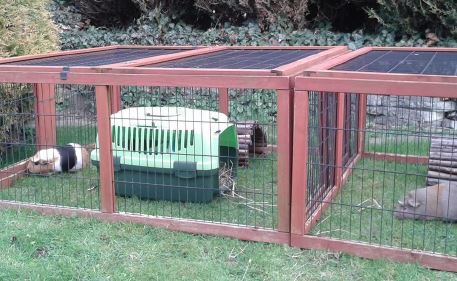
Sitting around in a cage can cause perineal impactions in boars (a compacted collection of poops in the perineal sac, which can grow to the size of a tennis ball!); heart, respiratory and circulation abnormalities; and pododermitits (bumblefoot, see above), which is often due to poor circulation.
Guinea pigs are essentially a wild animal that rely on you to provide this essential part of care as long as he is SAFE from predators. Even if he is out for an hour, it’s better than nothing. If he’s not interested, he will stay in his box, but give him time to make a decision. It may be that it’s been so long since he’s been out that he’s forgotten what it’s like! The chances are he will be delighted to do what is natural.
The addition of toys, arches, tunnels AND a companion will add to his mental stimulation. Putting him out before you feed him his veg will encourage him to move
around more. The grass can be wet if he has a nest box. It can be a little windy, as you will find that, the closer to the ground you get, the less windy it is. What they seem to hate is squally rain and, of course, snow and ice.
Our guinea pig clinic, chemist and grooming facility offers routine procedures, non-prescription medications, de-matting, trimming, bathing and spa treatments.
Fundraising
 Tash King, one of our supporters and volunteers, will be raising money for us and our piggies by abseiling down the ArcelorMittal Orbit in Stratford. It’s the UK’s tallest sculpture at 80 metres high!
We’re really thrilled that Tash is taking on this challenge in aid of April Lodge. If you’d like to support her, please visit her JustGiving page:
www.justgiving.com/crowdfunding/natasha-king.
Upcoming events
CANCELLED – Chilli and Quiz Night at Woodnesborough Football Club
 Unfortunately our quiz night that was due to take place on 28th April at Woodnesborough Football Club has been cancelled.
April Lodge Open Day
Sunday 5th August from 10am. Not to be missed! More details to follow.
Can you help?
 Just before we go, we’d like to ask for your assistance. We really need newspapers to line our hutches. As the freebies have gone, our supplies have gone too. We use about 300 newspapers a week to keep our piggies fresh at cleaning out times.
Eastry neighbours are doing their best to drop off old papers and we have a volunteer who brings as many as possible from a local hospital, but we are still short. If you have newspapers to spare, please do bring them in. Thank you!
Until next time…
Thanks for reading! This edition of Jeepers Squeakers was put together by Lizzie Sabin with contributions from Val Savage and Jo Lockett. The next edition of Jeepers Squeakers is due out in June. Please contact us if you have anything to say, would like any issues addressed, or would like an article placed.
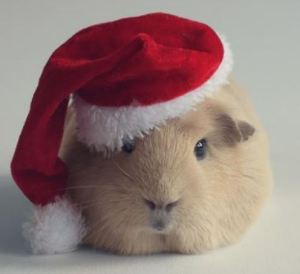
 We are very excited to be part of the great guinea pig Secret Santa project again this year. This is a global initiative whereby complete strangers (yes, really!) put together parcels of Secret Santa presents for deserving piggies in shelters across the world. It’s a truly lovely idea at Christmas, especially for older or sick piggies that may not get rehomed.
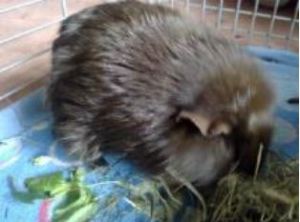 Guinea pigs are fairly prone to this condition, seeing as they are so close to the ground. You can help by ensuring they are kept in clean conditions and by looking out for a guinea pig that hunches his back when he urinates (see picture below) and listening out for the accompanying, sometimes loud, squeaks of pain.
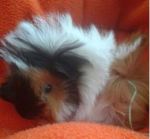 Yet again, we have rescued some guinea pigs found down on the train tracks. Why people think that throwing unwanted pets off a moving train or dumping them on the tracks is acceptable is beyond us. But we’re pleased to say that we were able to rescue these two, thanks to our regular rescuer in the railway network who spent his birthday catching them. Thank you!
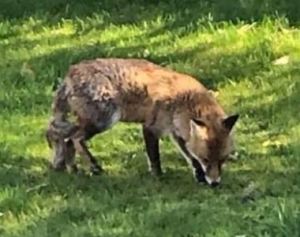 Foxes: Guinea pigs are very vulnerable to attacks by foxes, especially overnight. Once Mr Fox knows there is a guinea pig or two to be had, he will be back night after night. He is normally relentless in his quest to capture and kill. We often get unwanted hutches donated to us that show the teeth and claw marks of foxes as they have tried repeatedly to get to the guinea pigs. Cheaply made hutches are easily broken into. Even if he has visited but not managed to get to his prey, the guinea pigs will often die of a trauma-related heart attack.
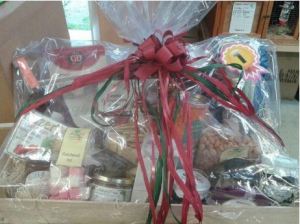 1st prize (pictured) is a HUGE hamper of goodies – biscuits, chutneys, sweets, nuts and more.
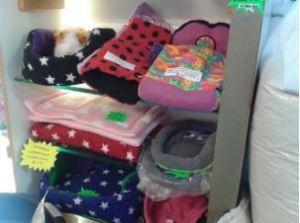 Our shop is full to bursting at the moment with new stock and, in particular, stuff to keep your piggies warm this winter. We have foodie treats, microwaveable heat pads, shampoos, aromatherapy oil soaks, medicines and a great selection of washable cuddle mats, caves, sofas and igloos. All piggies love curling up in these to keep cosy in winter!
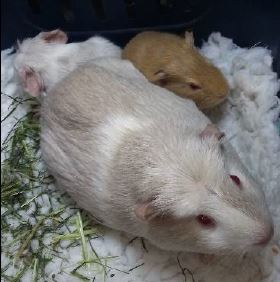 While we don’t ever breed guinea pigs, we do sometimes have pregnant sows come in. This happened earlier this year when Pinky came in. Pinky was one of our railway babies, who had been left in a carrier bag in Hove train station. On arrival, we paired her with Puzzle, a neutered boar, so she had a companion. Puzzle had been found in a park, being used as dog bait! So Pinky and Puzzle really needed some tlc! But the drama wasn’t going to end there. It soon became clear that Pinky was pregnant, as she suddenly piled on loads of weight. Usually, weight gain is a sign of good care, food and lovely hay, but hers just kept going up and up. At only around eight weeks herself, Pinky was very young to be pregnant, but she gave birth just fine, and on the afternoon of June 29th her two babies joined us. Named Cinnamon and Parsley, both mum and babies went on short‐term foster with our volunteer Flo so that they could be handled daily. We have now paired Cinnamon (a boar) with an older boar called Danny, and they’re ready and waiting for adoption. And Parsley (a sow) has been paired as well and has already found a loving home.
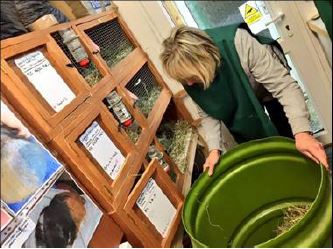 9–9.45: We move the outside runs to a fresh patch of grass and check there are no gaps or broken lids. Guinea pigs do a good job of keeping grass short, so runs can’t simply be left in one spot every day. We also don’t like the boys to get the smell of girls if they have been in that run the day before (as it can make them aggressive and excitable).
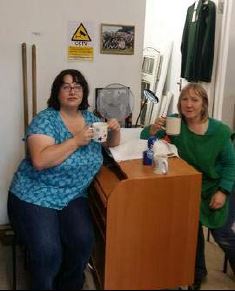 11.15–11.45: All cleaned out hutches are wiped dry of any remaining disinfectant and re‐made with a good layer of newspaper and lots of hay. Their freshly scrubbed water bottles and dried food dishes are replaced and their daily veg ration put in ready for them. At 11.45, they are brought back inside for breakfast in their nice clean hutches, usually followed by a good sleep.
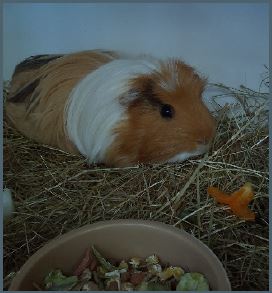 An eligible gentleman, Nigel, seeks a guinea pig friend. A guinea of certain years, Nigel is very shy, somewhat lonely, and has lovely luscious locks. He enjoys fine vegetarian dining, cuddles on occasion, and trips to the lawn (as long as he has a tunnel to hide in). Would like to meet a fellow piggy, preferably female, to share his hutch with. Nigel comes to life when near other piggies, and just wants one to call his own. Can offer strolls on the lawn and cuddles in hay. Apply at April Lodge.
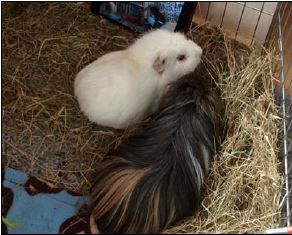 Munch, a bereaved boar of around five years, was looking for a companion. Luckily, Joey, another older and bereaved boar, was also looking for one! Munch was a little difficult to start with, but Joey took him under his wing and told him it was all going to be ok. Here they are a week after getting home. Munch is the white one and Joey the longer‐haired one.
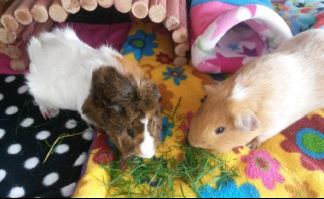 Mackie was one of three guinea pigs found in a biscuit tin, and came into the charity when he was just a tiny baby. Benji came into the charity with another boar, but they’d been separated due to fighting with each other. Things went well when we introduced the two, so it was only three days before the divider was removed and they went in together. Their owner, Di, tells us that they adore each other and that it’s a match made in heaven.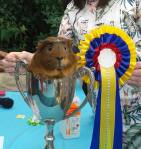
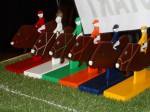 Our popular Guinea Pig Race Night is happening again on Saturday 7 October at 7pm. Of course, we don’t use real guinea pigs! Tickets are £5 each, you can bring your own food and drink, and we will, of course, bet! The event is held at Manston Village Hall: CT12 5BA.
 APRIL LODGE GUINEA PIG RESCUE